
On Optimism

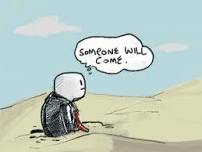
OptimismOver the course of my practice, I've come to know a few men and women who emerged from families so toxic and dysfunctional that I often wondered how they managed to survive, emotionally speaking, and why they hadn't long ago surrendered to despair. Given how little goodness they encountered in their post-uterine world, why did they continue to believe in and keep looking for something better? What was the source of the ongoing hope that brought them to my office in the belief that someone could help? I think of these clients from truly awful families as optimists; this piece serves as a bookend to my last post on pessimism but maybe I'm misuing the word optimism. In this case, I mean that my optimistic clients, encountering a world without love, almost entirely bereft of goodness, nonetheless believed in the possibility of good and kept on searching for it. Hopeful might be a better adjective to describe these people.

Continue "On Optimism"

On Pessimism

Pessimism I haven't been posting much lately because I've been focused on my book about narcissism, plus I just completed another article for The Atlantic, which you can find here. It's about bullying as a kind of narcissistic behavior, linking the Richie Incognito story with the suicide of Rebecca Sedgwick and further thoughts on Lance Armstrong. Anyway, I've now emerged from my research-and-proposal-writing cocoon; it feels good returning to the "outside" world!

So in my practice, I've lately been thinking about pessimism as a character trait. Selena, the client I described in my post about the importance of joy in psychotherapy, tends to be very pessimistic about her future. She believes that she blew her opportunity to launch a career right after college and that nobody will want to hire her now because newly-minted college graduates will be applying for the same positions. Not long after she graduated, Selena was fired from a job that didn't particularly suit her, and she found the experience painfully humiliating. Most of us would feel the same way, but Selena has had a hard time recovering and moving on. She feels that getting fired has "tainted" her. Pessimism about her future keeps her immobilized.

Continue "On Pessimism"

Another Everyday Narcissist — Me

Painful WristA number of site visitors took issue with one of my recent posts, largely because of the way I used the word narcissist. Most people use it as a synonym for Narcissistic Personality Disorder, so it's understandable that those visitors heard me calling Ellen a bad name. But I use narcissistic in a descriptive sense to cover a wide range of behaviors, not all of them pathological; an Everyday Narcissist such as Ellen is in no way the same thing as a person who suffers from NPD.

In order to make this distinction clear, I'm going to describe another Everyday Narcisisist -- me. Shortly after my return to North Carolina, I went for my first piano lesson after the long summer break. I've been studying with my teacher Pei Fen for more than four years; my oldest son William studied with her for two years before that, so I've known her for six or seven years now. She's a friend as well as my teacher. In addition to the playing and instruction that goes on during our lessons, we also catch up and talk about our personal lives. I had a lot to tell her about my time in Colorado.

Continue "Another Everyday Narcissist — Me"

Joy in the Psychotherapy Relationship

Joy2Naomi, one of my long-term clients and a therapist herself, has been talking in session lately about joy. The importance of joy in the mother-infant relationship, in adult romantic relationships, and in the relationship between therapist and client. Her ideas have grown out of her own practice, partially stimulated by our work together and informed by Allan Schore's writings on enjoyment-joy (part of the inborn affect system). Naomi's views have had a strong influence on my own: we therapists learn so much from our clients, especially when they are thoughtful, gifted clinicians themselves.

This is an over-simplification of her views, but Naomi believes that joy is what makes the agony of infancy bearable. Helplessness and vulnerability, the reality of separation from mother, intense emotional pain of all kinds -- these experiences are an inevitable part of early infancy. The joy we optimally experience in relation to our mothers helps to make the pain bearable. Feeling joy in her presence and finding this joy reciprocated helps us to bear the trauma of separation from her. Finding that our own joy elicits equal (and even greater) joy in mother allows us to endure feeling small, helpless and vulnerable.

Continue "Joy in the Psychotherapy Relationship"

The Everyday Narcissist Revisited

JumperDuring the first year or so after I launched this site, my post about narcissistic behavior and the lost art of conversation was always a reader favorite. One of mine, too. I thought of it this past weekend when we were dining at a restaurant here in Colorado to celebrate a friend's 60th birthday. Passing by our table, the hostess overheard mention of North Carolina. A Raleigh native, she stopped by a few minutes later to introduce herself. Here is what I learned about this woman during our conversation, all without the prompting of a single question. Let's call her Ellen, a quite attractive blond who recently turned 40.

Ellen had married as a freshman in college and gave birth to three children during each of the following years. She and her husband separated when the youngest was three and Ellen subsequently reared those three kids alone, without his emotional or financial support. During all that time, she vowed that once the youngest had left home, she would leave North Carolina and make an entirely new life for herself somewhere out west. Two years ago when the third child finally went off to college, she packed up and moved to Colorado in order to start anew. Now she works as a hostess in a tony restaurant and gives riding lessons during the day.

Continue "The Everyday Narcissist Revisited"